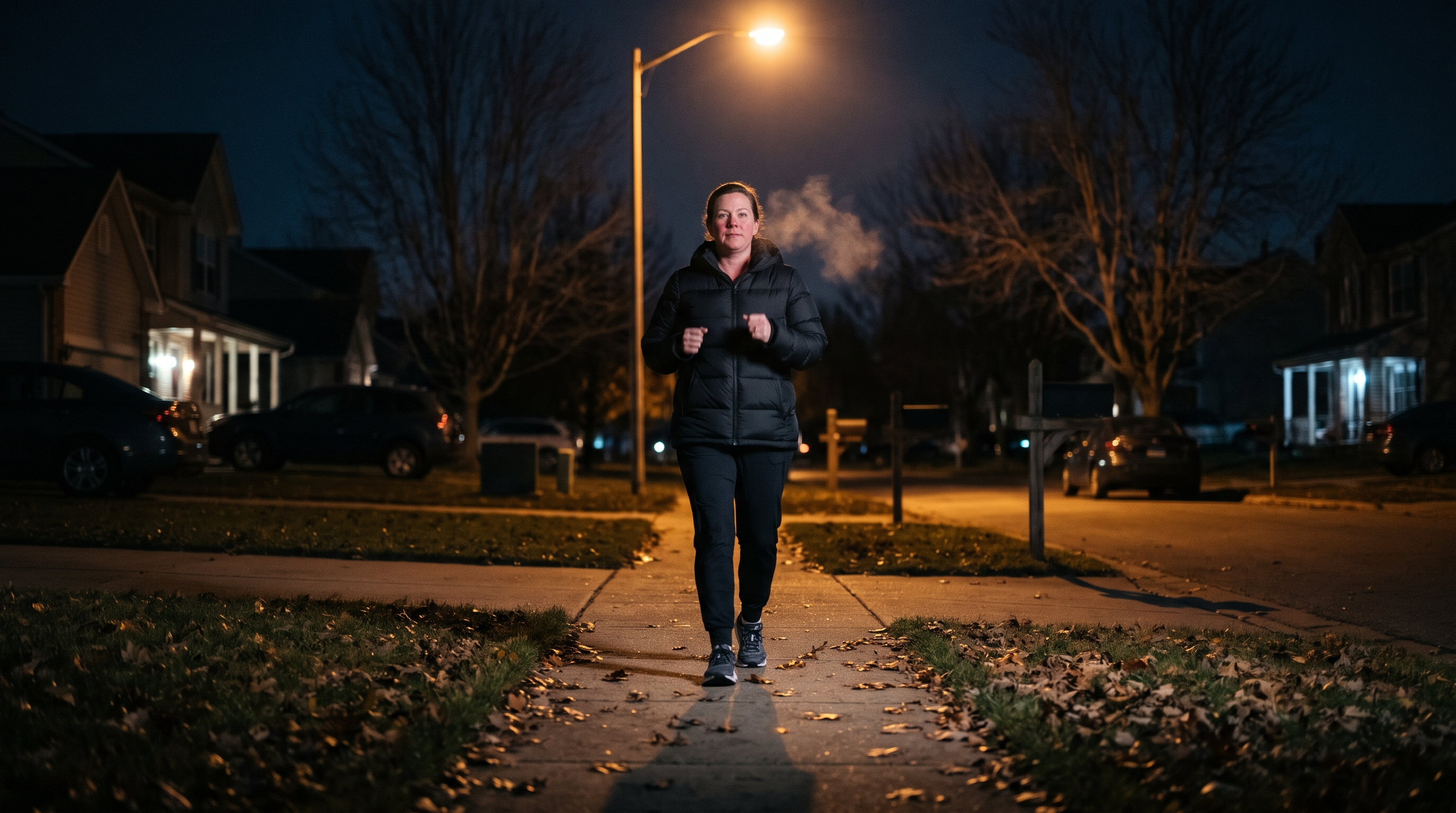
How Many Steps a Day to Lose Weight? A Realistic Guide
There is no single step count that guarantees weight loss, and 10,000 steps a day is a popular goal, not a medical rule. The number that matters most is your own starting point: count your usual daily steps for a week, then add about 1,000 to 2,000 steps a day every week or two until walking becomes a steady part of your routine. For most adults, that works out to at least 150 minutes a week of brisk walking or similar activity. Walking supports weight loss best when you pair it with steady eating habits, strength training and good sleep, because steps alone rarely make up for a diet that is not working.
This guide covers how many steps a day most people need, why walking helps weight loss, how to build up your steps without burning out, how walking compares with other workouts, and when it makes sense to get medical support. If you have been walking for months without seeing a change, our guide on why you might not be losing weight while eating healthy may help you find the missing piece.
How many steps a day do you need to lose weight?
Most people search for one clear number. The truth is that the right number depends on where you start.
If you take about 3,000 steps on a normal day, jumping to 10,000 overnight is a big change. Your feet, knees and schedule may not be ready for it, and many people quit within two weeks. If you already walk 8,000 steps a day, adding a few hundred will not change much.
A better way to think about it:
Start with your baseline. Wear your phone or a step tracker for one normal week and note your average.
Add steps in small blocks. Increase by about 1,000 to 2,000 steps a day, hold that for a week or two, then add more.
Aim for a weekly activity goal. The NIDDK recommends trying to do at least 150 minutes a week of moderate-intensity aerobic activity, like biking or brisk walking. That is about 30 minutes on five days.
Count brisk minutes, not just steps. A brisk walk where you can talk but not sing does more than a slow stroll with the same step count.
For many adults, building up to somewhere between 7,000 and 10,000 steps on most days is a realistic target. Treat that as a direction, not a pass or fail test.
Why does walking help with weight loss?
Walking burns calories, but that is only part of the story. It also helps in ways the scale does not show right away.
It adds up. Small walks across the day often burn more total energy than one hard workout you dread and skip.
It is easy to recover from. Unlike intense workouts, walking rarely leaves you so sore or hungry that you eat back the calories.
It supports your heart. MedlinePlus notes that moderate aerobic exercise burns calories, can help lower blood pressure and benefits your heart, with a target of 150 minutes per week.
It helps with stress and sleep. A walk after work can take the edge off a stressful day, and better sleep makes hunger easier to manage. Our guide on sleep, stress and weight explains that link.
It is a habit you can keep. You can walk at almost any age and fitness level, in any season, with no gym required.
The NIDDK also lists spending a lot of time sitting or lying down among the habits that may lead to weight gain. Walking more is one of the simplest ways to sit less.
The deciding factor: is walking your plan or part of your plan?
Walking is a strong tool, but it works best as one part of a plan, not the whole plan.
Here is why. A brisk 30 minute walk burns a modest amount of energy, often less than people expect. That is helpful when your eating is steady. It is easy to undo, though, if a long walk turns into a large muffin or a sweet coffee drink on the way home.
So ask yourself:
Is my eating already steady? If yes, adding steps can tip the balance and help the scale move.
Am I walking to make up for eating? If yes, steps alone will probably not get you there. Start with meals first.
Am I protecting my muscle? Walking does not build much muscle. Adding two or three short strength sessions a week helps you lose fat instead of muscle. Our guide on fat or muscle and how to keep muscle while losing weight explains why this matters.
When walking is part of a plan that includes good meals, strength training and sleep, it becomes one of the most reliable habits for lasting weight loss.
How do you build up your daily steps without burning out?
The goal is to make walking feel normal, not like a punishment. These steps help most people build up safely.
Find your baseline first. Track a normal week before you change anything.
Add one short walk a day. A 10 minute walk after lunch or dinner is an easy start.
Split it up. Three 10 minute walks count just as much as one 30 minute walk for most people.
Walk after meals. A short walk after eating is easy to remember and fits into most days.
Use everyday chances. The NIDDK suggests choosing parking spots that are farther away for extra steps, as long as the area is safe and well lit. Take the stairs, walk during phone calls and do a lap of the store before you shop.
Pick up the pace slowly. Once the time feels easy, walk a bit faster or add a gentle hill.
Have a backup plan for bad weather. Mall walking, an indoor track or a short walking workout at home keeps your streak going in winter.
Wear shoes that fit well. Sore feet are one of the most common reasons people stop walking.
If you have joint pain, heart or lung problems, or you have not been active for a long time, check with your provider before you increase your activity.
Walking vs. other workouts for weight loss: how do they compare?
Every type of movement helps in a different way. Here is how walking compares with two other common choices:
Daily walking | Strength training | High intensity workouts | |
|---|---|---|---|
Main benefit | Steady calorie burn and heart health | Protects and builds muscle | Fitness in less time |
Effect on hunger | Mild | Mild to moderate | Can raise hunger |
Recovery needed | Very little | 1 to 2 days between sessions for the same muscles | 1 to 2 days |
Risk of injury | Low | Low to moderate with good form | Higher |
Easy to keep doing | Very easy | Easy once learned | Harder for many people |
Best for | Everyone, every day | 2 to 3 times a week | 1 to 2 times a week if you enjoy it |
Most people get the best results by walking most days and adding strength training two or three times a week. You do not need high intensity workouts to lose weight.
Why are you walking more but not losing weight?
This is one of the most common frustrations we hear. If your steps went up but the scale did not move, a few things may be happening:
You are eating back the calories. Walking can raise your appetite a little, and it is easy to reward a long walk with a treat.
Water is masking fat loss. New activity can cause your muscles to hold extra water for a while. Our guide on how to lose water weight explains why the scale jumps around.
You are building a little muscle. If you also started lifting, the scale can move slowly even as your waist shrinks.
Your step count is lower than you think. Phones left on a desk miss a lot of steps. A watch or clip-on tracker is often more accurate.
You have hit a plateau. Your body adjusts over time. Our guide on the weight loss plateau explains how to tell a real stall from normal swings.
Give a new walking routine at least four to six weeks, and judge it by your waist, how your clothes fit and your energy, not just the scale.
How can a body composition scan show what walking is doing?
The scale cannot tell you whether you lost fat, gained a bit of muscle or are holding extra water. For someone who just started walking more, that can be discouraging.
At Transformative 360, every consultation includes a Fit3D body scan. It captures your body shape and measurements, including your waist and hips, and estimates your body composition in under a minute. A repeat scan after a few weeks of steady walking shows whether your waist is shrinking and whether you are keeping your muscle, even when the scale is slow. You can read more in our guide to the Fit3D body scan in Clifton and our guide on body composition vs. the scale.
When should you get medical weight loss support?
Walking more is a great habit, but some people need more support to see progress. It may be time to talk with a provider if:
You have been walking and eating well for months with little change.
Your appetite or cravings make it hard to stick to a plan.
You have high blood pressure, prediabetes or another health condition linked to weight.
Joint pain or fatigue makes it hard to stay active.
Your weight keeps coming back after every attempt.
A medical weight loss program pairs you with a provider who reviews your health history, sets a realistic pace and checks your progress. A nutrition plan can help you match your meals to your activity. Our guide on working with a nutritionist for weight loss in Clifton explains what that looks like.
For some patients, the provider may recommend Liraglutide injections, an FDA-approved GLP-1 medication that helps regulate appetite. It is prescribed and monitored by a provider and is not right for everyone. Medication works best alongside healthy eating, regular walking, strength training and good sleep.
Serving Clifton and the surrounding communities
Transformative 360's medical weight loss clinic in Clifton is located on Route 46, a short drive for people across Passaic, Essex and Bergen counties. We regularly see patients from Passaic, Paterson, Garfield, Nutley, Montclair, Bloomfield, Wayne, Totowa, Little Falls, Woodland Park, East Rutherford, Wallington and Rutherford. If you are building a walking habit and want to know whether it is working, our Clifton office is easy to reach, and a Fit3D body scan is part of every consultation.
Book your consultation
If you are walking more and still not sure you are on the right track, a consultation is a simple next step. You will get a Fit3D body scan, a one-on-one conversation about your goals and health history, and a plan that fits your schedule.
Transformative 360 is proud to be recognized with the BusinessRate #1 award for weight loss services in Clifton, NJ.
Ready to get started? Book your consultation online or call us at (201) 554-3755. Transformative 360, 1117 RT 46 E Suite 203, Clifton NJ 07013.
Frequently asked questions
Is 10,000 steps a day enough to lose weight?
It can help, but 10,000 steps is a popular goal, not a medical rule. Whether you lose weight depends on your eating, sleep and overall activity too. If you are starting far below 10,000, build up gradually instead of jumping there overnight.
Can I lose belly fat by walking?
Walking helps you lose fat overall, and belly fat usually comes down as your total body fat drops. No exercise burns fat from one area alone. Our guide on how to lose visceral fat explains which habits matter most for the belly.
Is it better to walk fast or walk longer?
Both help. A brisk pace raises your heart rate and makes each minute count more, while longer walks add total activity. A good approach is to build time first, then slowly pick up your pace.
Should I walk before or after eating?
Either is fine. Many people find a short walk after meals easy to remember, and it fits naturally into the day. The best time is the one you can stick with.
How long does it take to see results from walking?
Many people notice better energy and sleep within a few weeks. Changes in your waist and the scale usually take longer, often four to six weeks or more, especially if you are also changing how you eat.
Do I still need strength training if I walk every day?
Yes, if you can. Walking supports your heart and burns calories, while strength training two or three times a week helps you keep muscle as you lose fat. Together they work better than either one alone.
