Fit3D Body Scan in Clifton, NJ: What It Shows You
A Fit3D body scan is a quick, non-invasive 3D scan that captures a full digital model of your body along with hundreds of measurements, including your waist, hips, arms, and thighs. It also estimates your body composition and looks at posture and balance. The scan takes less than a minute, uses safe infrared light, and lets you track how your body is actually changing, not just what the scale says. At Transformative 360, a Fit3D scan is included in every consultation.
That is the short answer. Below, we explain how the scan works, what it can and cannot tell you, how it compares to the scale and BMI, and how we use it to build your plan.
The deciding factor: do you want to know what is changing, or just how much you weigh?
Your bathroom scale gives you one number. It cannot tell you whether you lost fat or muscle, whether your waist got smaller, or why the number went up after a week of good choices. For many people, that single number is the reason they give up.
A Fit3D scan answers a different question. Instead of "how much do I weigh," it shows "what is my body made of, and where is it changing." If you have ever felt like you were doing everything right with nothing to show for it, this is often the missing piece.
So the real question is simple: would it help you to see your progress in inches, shape, and composition instead of pounds alone? For most people starting a weight loss or body contouring plan, the answer is yes.
What is a Fit3D body scan?
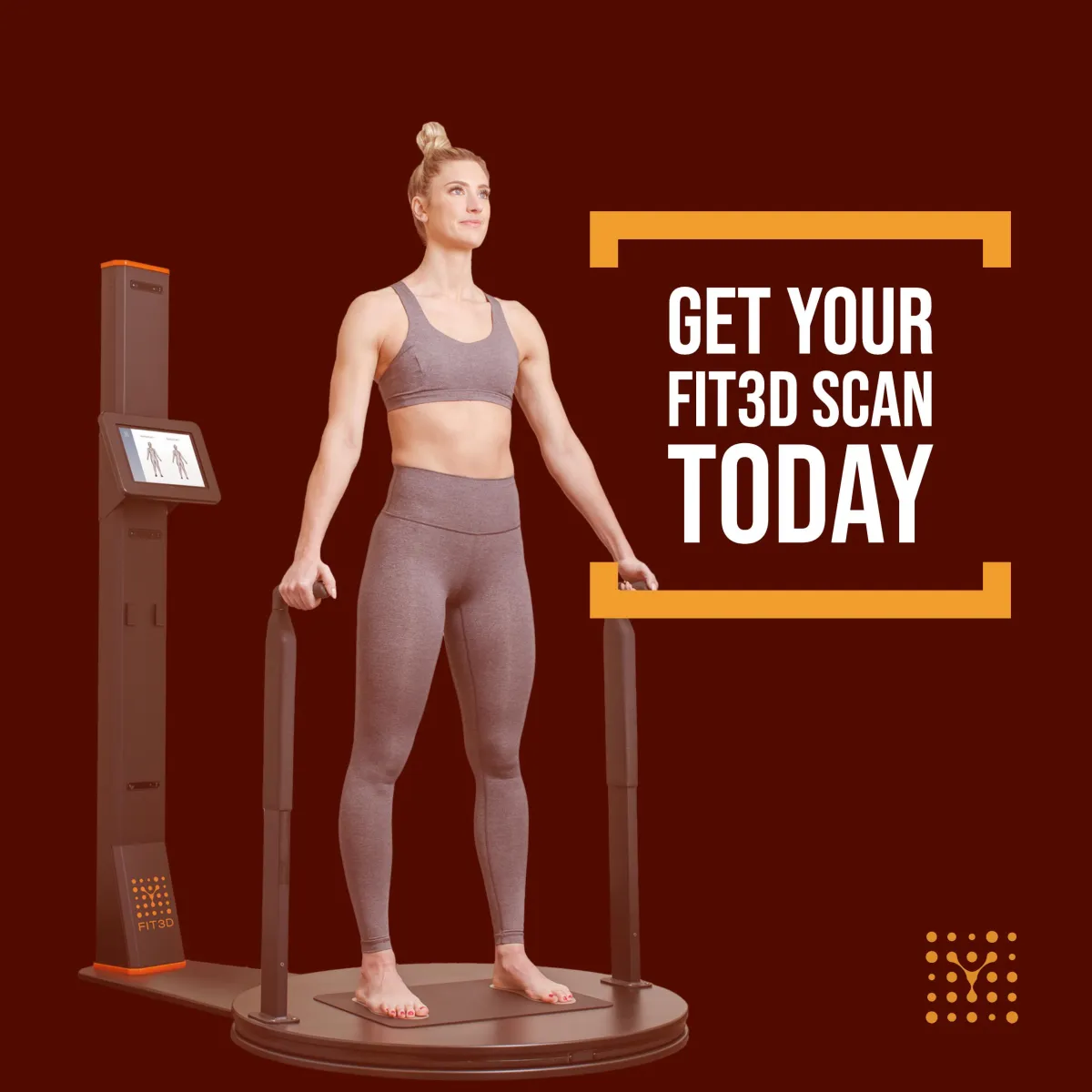
Fit3D is a 3D body scanning system used by medical clinics, wellness centers, and fitness facilities. You stand on a small rotating platform while a tower of cameras captures your body from every angle. The system then builds a 3D model of your body and pulls detailed measurements from it automatically.
Think of it as a full set of tape measure readings, a body shape snapshot, and a progress photo, all taken in one visit and stored so you can compare them over time.
How does a Fit3D scan work?
The process is quick and easy:
You change into form-fitting clothing, like leggings and a fitted top or sports bra. Loose clothes can blur the measurements.
You stand on the platform and hold the handles at your sides.
The platform slowly turns while the scanner uses infrared light to map your body. This takes less than a minute.
The system builds your 3D model and calculates your measurements.
You review your results with our team and talk through what they mean for your goals.
There are no needles, no pinching, and no radiation. The infrared light is the same type of safe light used in many everyday cameras and sensors.
What can a Fit3D body scan tell you?
Detailed body measurements
The scan captures circumference measurements across your body, such as your chest, waist, hips, arms, and thighs. These are far more consistent than a tape measure, because the scanner measures the same spots the same way every time.
A 3D model of your body shape
You get a 3D image of your body that you can compare side by side with future scans. Many people find this is the most motivating part, because they can actually see their shape change, even when the scale has barely moved.
Body composition estimates
Using your measurements, the scan estimates body fat percentage and lean mass. This helps you understand whether you are losing fat, holding on to muscle, or both. That matters, because losing muscle can slow your progress and change how your body looks.
Posture and balance
Fit3D also looks at posture and how your weight is distributed. This is not the main reason most of our patients scan, but it can be useful information if you are increasing your activity.
Progress over time
This is where Fit3D really earns its place. A single scan gives you a starting point. Repeat scans show you what is changing and where, so you and our team can see what is working and adjust what is not.
How do you read your Fit3D results?
Your first scan can feel like a lot of numbers at once. Here is how to make sense of it.
Start with your baseline, not a target. Your first scan is not a grade. It is simply your starting point. The value comes from comparing future scans to this one.
Focus on the measurements that match your goal. If you want a smaller waist, watch your waist and hip measurements. If you are working on overall weight loss, look at your body fat estimate alongside your measurements. If you are getting body contouring, focus on the specific area being treated.
Look for trends, not single numbers. Small changes between two scans can come from normal things like a big meal or a long day. A steady trend across several scans tells you much more than any one result.
Pay attention to muscle as well as fat. Healthy progress usually means losing fat while keeping as much muscle as possible. If your lean mass is dropping quickly, that is a signal to look at your protein intake, strength training, or overall plan.
Use the 3D model for motivation. Numbers are useful, but seeing your shape change side by side is often what keeps people going. Many of our patients say the visual comparison is the first time they truly believed their hard work was paying off.
You never have to interpret your results alone. Our team walks through your scan with you and explains what the numbers mean for your plan.
What can a Fit3D scan not tell you?
It is just as important to understand what a body scan is not.
It is not a medical diagnosis. A Fit3D scan does not check your thyroid, blood sugar, hormones, or any medical condition.
Body fat is an estimate. Like other body composition tools, it uses formulas, so the exact percentage is less important than the trend across your scans.
It does not replace a provider. Your scan is one piece of information. Your health history, goals, and lifestyle matter just as much.
The best way to use a Fit3D scan is as a consistent progress tracker. When you scan under similar conditions each time, the changes you see are meaningful.
Fit3D vs. the scale, BMI, and a tape measure
Method | What it tells you | What it misses | Best use |
|---|---|---|---|
Bathroom scale | Total body weight | Fat vs. muscle, where you are losing | Quick daily or weekly check |
BMI | Weight relative to height | Body composition, muscle, fat location | General health screening |
Tape measure | A few circumferences | Consistency, full body picture | Simple at-home tracking |
Fit3D body scan | 3D shape, hundreds of measurements, body composition estimate, posture | Medical conditions, lab values | Tracking real progress over time |
The scale and BMI are useful starting points, but they treat all weight the same. A person with more muscle and a person with more fat can weigh the same and have the same BMI while looking and feeling very different. A body scan shows that difference.
Who benefits most from a Fit3D scan?
People starting a weight loss plan
A baseline scan gives you a clear starting point. As you make changes, follow-up scans show progress that the scale may hide, especially in the early weeks when water weight goes up and down.
People on medical weight loss
If you are using Liraglutide injections or another medically supervised plan, tracking body composition helps make sure you are losing fat while protecting muscle. That is one of the most important parts of losing weight in a healthy way.
People stuck on a plateau
If the scale has not moved in weeks, a scan can show whether your body is still changing. Many people find they are losing inches while the scale stays flat. If you are dealing with this right now, our guide on why you may not be losing weight even though you are eating healthy walks through the most common reasons.
Body contouring patients
Treatments like SculpSure, Contour Light, and Invisa Red Body Contouring are designed to change your shape, not your weight. A Fit3D scan before and after treatment lets you see the change in specific areas, like your waist, hips, or thighs, in actual measurements.
How do I prepare for a Fit3D scan?
A few simple steps help you get consistent results:
Wear form-fitting clothing. Leggings and a fitted top work well. Avoid baggy clothes.
Remove bulky jewelry and shoes before you step on the platform.
Try to scan at a similar time of day for each visit, since meals and hydration can slightly change your measurements.
Keep things consistent. Similar clothing and timing for each scan make the comparisons more accurate.
That is all it takes. The scan itself is over in less than a minute.
Why we include a Fit3D scan in every consultation
At Transformative 360, we do not want to guess about your body. A Fit3D scan at your first visit gives us a clear picture of where you are starting, so we can recommend a plan that fits your goals rather than a one-size-fits-all program.
From there, the scan helps answer the questions that matter: Is your plan working? Are you losing fat and keeping muscle? Which areas are changing, and which ones might need a different approach? Whether your path includes medical weight loss, nutrition guidance, body contouring, or a combination, you will have real data to see your progress.
Serving Clifton and the surrounding communities
Transformative 360 is located on Route 46 in Clifton, a short drive for people across Passaic and Bergen counties. We regularly see patients from Passaic, Paterson, Garfield, Nutley, Montclair, Bloomfield, Wayne, Totowa, Little Falls, Woodland Park, East Rutherford, Wallington, and Rutherford. If you have been searching for a body scan near you, our Clifton office is easy to reach, and the scan is part of your consultation visit.
Ready to see what the scale is not telling you?
If you are tired of guessing whether your efforts are working, a Fit3D body scan gives you a clear, visual picture of your body and a starting point you can measure against. Pair it with a one-on-one consultation, and you will walk away with real answers and a plan built around you.
Transformative 360 is proud to be recognized with the BusinessRate #1 award for weight loss services in Clifton, NJ, a reflection of the results and care our patients tell us about every day.
Ready to get started? Book your consultation online or call us at (201) 554-3755. Transformative 360, 1117 RT 46 E Suite 203, Clifton NJ 07013.
Frequently asked questions
What is a Fit3D body scan? A Fit3D body scan is a quick, non-invasive 3D scan that creates a digital model of your body and captures hundreds of measurements. It also estimates body composition and looks at posture and balance, so you can track how your body changes over time.
How long does a Fit3D scan take? The scan itself takes less than a minute. Including changing and reviewing your results with our team, it fits easily into your consultation visit.
Is a Fit3D scan safe? Yes. The scanner uses infrared light to map your body. There is no radiation, no needles, and no discomfort. You simply stand on the platform while it turns.
How accurate is a Fit3D body scan? The circumference measurements are very consistent because the scanner measures the same way every time. Body fat percentage is an estimate, like with most body composition tools, so the most useful information is how your numbers change from one scan to the next.
What should I wear for a Fit3D scan? Wear form-fitting clothing such as leggings and a fitted top or sports bra. Loose or bulky clothing can affect your measurements.
How often should I get a body scan? Many people rescan every few weeks to see progress during a weight loss or body contouring plan. Our team will recommend timing based on your goals and treatment.
Is the Fit3D scan included in my consultation? Yes. At Transformative 360, a Fit3D body scan is included in every consultation at our Clifton office.
