
Not Losing Weight While Eating Healthy? 9 Real Reasons
If you are eating healthy and still not losing weight, the most common reasons are hidden calories in "healthy" foods, not enough protein, poor sleep, ongoing stress, and your body adapting to past dieting. For some people, medical factors like thyroid issues, insulin resistance, menopause, or certain medications are part of the picture too. The scale can also hide progress, because it cannot tell fat from muscle or water. The good news is that every one of these has a fix, and most of them are easier to correct than you might think.
That is the short answer. Below, we walk through the nine reasons we see most often at Transformative 360, how to tell which one applies to you, and what to do about it.
The deciding factor: is it your habits or your biology?
When healthy eating is not moving the scale, the problem usually falls into one of two camps.
The first is habits that look healthy but quietly add up. Large portions of good foods, cooking oils, smoothies, weekend snacking, and low protein all fall here. These are frustrating, but they are fixable with small, specific changes.
The second is biology working against you. Hormones, sleep, stress, medications, and an appetite that never seems to switch off can make weight loss hard even when your choices are good. Willpower does not fix biology. The right medical support does.
Most people have a little of both. The goal of this article is to help you figure out which camp you are mostly in, because that decides your next step.
Why am I eating healthy but not losing weight? 9 common reasons
1. Healthy foods still have calories
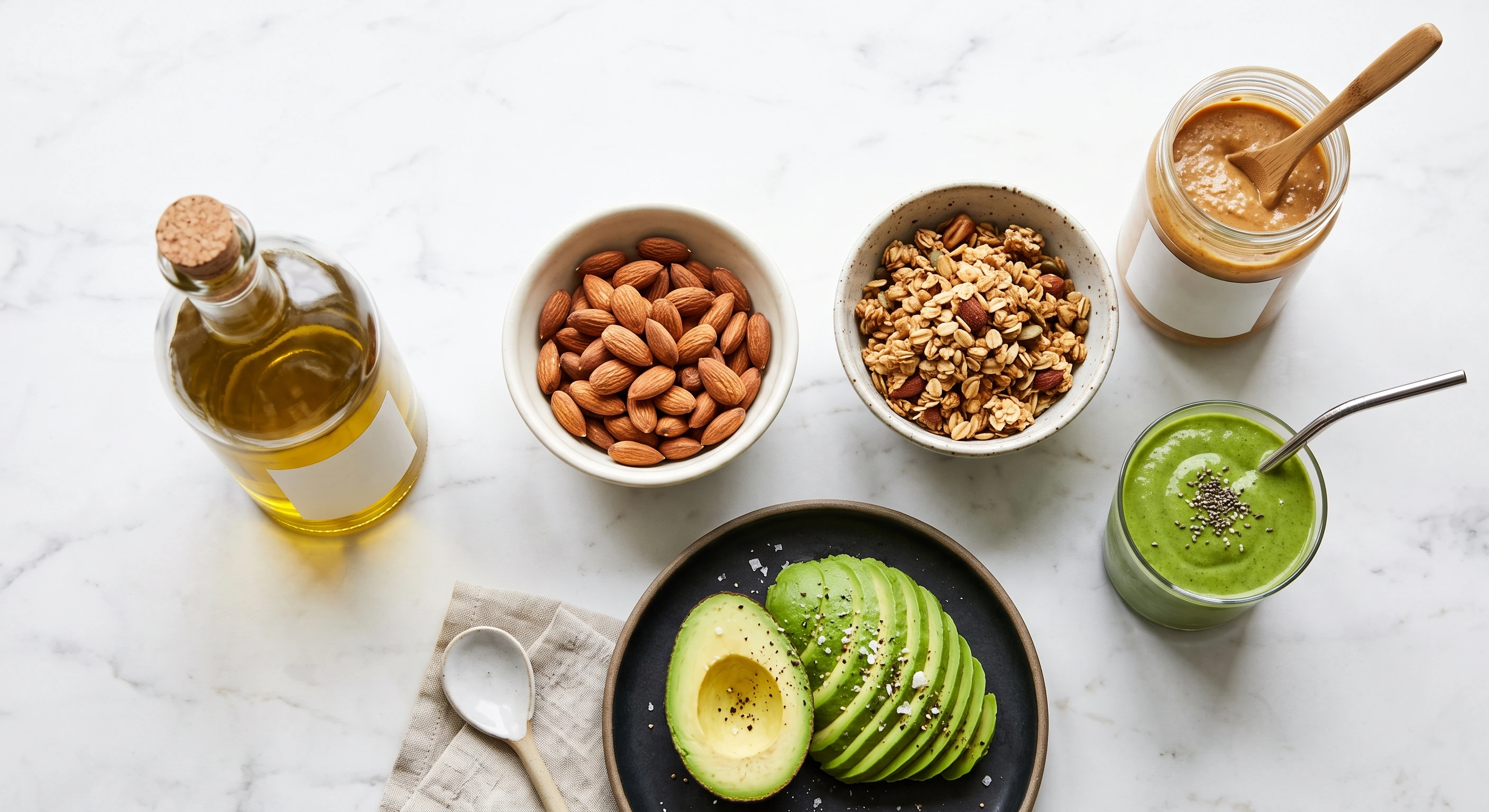
Avocado, nuts, olive oil, granola, nut butter, dried fruit, and smoothies are all nutritious. They are also some of the most calorie-dense foods you can eat. A drizzle of olive oil, a handful of almonds, and a "healthy" granola bowl can add hundreds of calories to a day without feeling like much food.
Eating well is about quality. Losing weight is still about quantity. You can be doing the first part perfectly and still miss the second.
What helps: Track everything you eat for one week, without changing anything. Most people are surprised by where the extra calories come from. It is usually two or three foods, not your whole diet.
2. Liquid calories and weekend drift
Lattes, juices, smoothies, sports drinks, and alcohol do not fill you up the way food does, but they count the same. On top of that, many people eat well Monday to Friday and loosen up on weekends. Two relaxed days can cancel out five careful ones.
What helps: Look at your full week, not your best day. If weekends look very different from weekdays, that is often the whole story.
3. You are not eating enough protein or fiber
A healthy diet that is light on protein and fiber leaves you hungry. Hunger leads to grazing, bigger portions, and late-night snacks. Protein also helps you hold on to muscle while you lose weight, and muscle matters for how your body looks and how many calories it burns at rest.
What helps: Build each meal around a protein source, then add vegetables, beans, or whole grains for fiber. Many people find their cravings drop within a week or two. If you want a plan built around your own preferences, working with a nutritionist for weight loss takes the guesswork out of it.
4. The scale is hiding your progress
The scale measures everything at once: fat, muscle, water, food in your system, and more. Your weight can swing a few pounds from one day to the next because of salt, carbs, hormones, or a hard workout. If you have started exercising, you may also be building muscle while losing fat, which can keep the number flat even as your body changes.
This is one of the most common reasons people give up right when things are starting to work.
What helps: Measure more than weight. Track your waist, how your clothes fit, and your energy. Better yet, track your body composition. At Transformative 360, every consultation includes a Fit3D body scan, which captures a 3D image of your body along with detailed measurements, so you can see changes the scale misses.
5. You are not sleeping enough
Short or poor sleep changes the hormones that control hunger and fullness. After a bad night, most people feel hungrier, crave quick energy from sugar and refined carbs, and have less willpower to say no. Tired people also tend to move less without noticing it.
What helps: Aim for a consistent bedtime and wake time, keep screens out of the last hour before bed, and treat sleep as part of your weight loss plan, not something separate from it.
6. Stress is running in the background
Ongoing stress raises cortisol, a hormone that can increase appetite and make it easier to store fat around the midsection. Stress also drives emotional eating and makes it harder to stick to any plan, no matter how good the plan is.
What helps: You do not need to remove all stress from your life. Short daily habits like a walk outside, a few minutes of slow breathing, or a set time to wind down in the evening can lower the load. Notice whether your snacking follows stressful moments, because that pattern is easier to change once you see it.
7. Your body has adapted to past dieting
If you have dieted on and off for years, your body may have adjusted. When you eat less for a long time, your body tends to burn a bit less energy, and many people also move less during the day without realizing it. This is not your metabolism being "broken." It is your body trying to protect its energy stores.
What helps: Very low calorie diets usually make this worse over time. A steady, moderate approach with enough protein, regular movement, and strength training tends to work better and last longer.
8. A medical factor is involved
Sometimes healthy eating is not working because something medical is getting in the way. Common examples include:
Thyroid conditions, especially an underactive thyroid, which can slow energy use
Insulin resistance or prediabetes, which affects how your body handles carbohydrates and stores fat
PCOS, which is linked to insulin resistance and weight gain
Menopause and perimenopause, when hormone changes often shift fat toward the belly
Certain medications, including some antidepressants, steroids, and diabetes medications, which can affect appetite or weight
The National Institute of Diabetes and Digestive and Kidney Diseases lists genetics, health conditions, medicines, sleep, and stress among the many factors that affect body weight.
What helps: Do not stop or change any prescribed medication on your own. Talk with your doctor about whether a medical factor could be playing a role. A medically supervised weight loss program takes your health history into account from the start.
9. Your appetite signals are working against you
For many people, the hardest part is not knowing what to eat. It is the constant hunger, the food noise, and the feeling of never being quite full. That is biology, not a lack of discipline.
What helps: This is where medical weight loss can make a real difference. Liraglutide injections are an FDA-approved GLP-1 medication that helps regulate appetite and fullness, so healthy eating feels manageable instead of like a daily fight. Liraglutide is prescribed and monitored by a medical provider and is not right for everyone, which is why it starts with a consultation.
Common reasons at a glance
Reason | Signs it might be you | What helps |
|---|---|---|
Calorie-dense healthy foods | Lots of nuts, oils, granola, smoothies | Track for 7 days and adjust portions |
Liquid calories and weekends | Lattes, juice, alcohol, looser weekends | Look at the full week, not your best day |
Low protein or fiber | Hungry soon after meals, frequent snacking | Build every meal around protein |
Scale hiding progress | Clothes fit better but weight is flat | Track body composition with a Fit3D scan |
Poor sleep | Cravings and low energy after bad nights | Consistent sleep schedule, less screen time |
Ongoing stress | Snacking follows hard days | Short daily wind-down habits |
Adapted metabolism | Years of on and off dieting | Steady approach plus strength training |
Medical factors | Thyroid, PCOS, menopause, certain medications | Medically supervised weight loss |
Appetite working against you | Constant hunger, food noise | Ask about Liraglutide injections |
How can I tell which reason applies to me?
Start with the simplest checks first:
Track your food and drinks for 7 days without changing anything. Hidden calories and weekend drift usually show up quickly.
Check your protein at each meal. If most meals are light on protein, start there.
Look at your sleep and stress over the same week. Bad nights and hard days often line up with your biggest eating days.
Measure more than weight. A tape measure, progress photos, or a body composition scan will tell you more than the scale alone.
Get a medical opinion if you have done the above for a few weeks and nothing has changed. That is often the sign that biology, not habits, is the main issue.
If you are in the second camp, it is not a failure. It just means you need a different kind of help than another diet.
When should I see a weight loss professional?
It makes sense to get support if any of these sound familiar:
You have been eating well and staying active for a month or more with no change in weight or measurements.
You are constantly hungry, even after balanced meals.
You have gained weight without changing how you eat.
You have a history of thyroid issues, prediabetes, PCOS, or you are going through menopause.
You have lost weight before but always regained it.
A good first visit should look at your history, your habits, and your body composition, not just your weight. At Transformative 360, that is exactly how a consultation works. We start with your goals and your Fit3D body scan, then talk through options that fit you, whether that is nutrition guidance, Liraglutide injections, or a combination.
Once your weight is moving, some people also choose body contouring for stubborn areas that do not respond to diet and exercise, like SculpSure for targeted fat reduction or Contour Light for inch loss. These treatments shape the body. They are not a replacement for weight loss, and we will always tell you which one fits your goal.
Serving Clifton and the surrounding communities
Transformative 360 is located on Route 46 in Clifton, an easy drive for people across Passaic and Bergen counties. We regularly see patients from Passaic, Paterson, Garfield, Nutley, Montclair, Bloomfield, Wayne, Totowa, Little Falls, Woodland Park, East Rutherford, Wallington, and Rutherford. If you have been searching for help with medical weight loss near Passaic or anywhere in the Clifton area, our office is a short drive away.
Ready to find out what is really holding you back?
If you are eating healthy and the scale still will not budge, you do not need to try harder at the same plan. You need to know what is actually getting in the way. A one-on-one consultation with our team, including your Fit3D body scan, gives you real answers and a plan built around your body, with no pressure and no guesswork.
Transformative 360 is proud to be recognized with the BusinessRate #1 award for weight loss services in Clifton, NJ, a reflection of the results and care our patients tell us about every day.
Ready to get started? Book your consultation online or call us at (201) 554-3755. Transformative 360, 1117 RT 46 E Suite 203, Clifton NJ 07013.
Frequently asked questions
Why am I eating healthy but gaining weight? The most common reasons are larger portions of calorie-dense healthy foods, liquid calories, water retention, and muscle gain if you recently started exercising. If you are gaining weight without any change in your eating, a medical factor like thyroid function, hormones, or a medication may be involved, and it is worth talking to a provider.
How long does it take to see weight loss after eating healthy? Many people notice changes in energy and how their clothes fit within a few weeks. The scale can take longer because of normal day-to-day water swings. If you see no change in weight or measurements after a month of consistent effort, it is a good time to look deeper.
Can you eat too little to lose weight? Eating very little for a long time can make weight loss harder to sustain. Your body tends to burn less energy, you may lose muscle, and strong hunger often leads to overeating later. A moderate, steady approach with enough protein usually works better over time.
Does stress really stop weight loss? Stress does not stop weight loss on its own, but it makes it harder. Ongoing stress can increase appetite, drive emotional eating, and disrupt sleep, which all work against your progress.
Is a weight loss plateau normal? Yes. Most people hit at least one plateau. Your body adjusts as you lose weight, and the scale can also stall while you are still losing fat and building muscle. Measuring body composition, not just weight, helps you see what is really happening.
What does a Fit3D body scan show? A Fit3D scan creates a 3D image of your body and captures detailed measurements, so you can track changes in your shape and size over time. At Transformative 360, it is included in your consultation.
