Fat or Muscle? How to Keep Muscle While Losing Weight
The scale cannot tell you whether you are losing fat or muscle. It only shows that your total weight went down. The only reliable way to know what you are losing is to measure your body composition, because two people can lose the same 10 pounds and end up with very different results. Muscle loss is more likely when you eat very little, skip protein or stop strength work, and that can happen more easily when a medication like Liraglutide quiets your appetite. The good news is that a few steady habits protect muscle while you lose fat: enough protein, regular strength training, a sensible pace and tracking what is really changing.
This guide covers how to tell fat loss from muscle loss, why muscle loss can happen during GLP-1 weight loss, how the two compare, and the practical steps that help you keep muscle while losing weight. If you have not read it yet, our guide on why body composition matters more than the scale explains the basics of fat mass and lean mass.
Can you tell if you are losing fat or muscle by the scale alone?
No. The scale measures everything at once: fat, muscle, water, bone and whatever you ate or drank recently. When the number drops, it has no way to show which of those went down.
That matters because the first few pounds of any new plan are often water, especially if you cut back on carbohydrates or salt. After that, the loss is a mix of fat and some lean tissue. How much of each depends on how fast you are losing, how much protein you eat, whether you do strength work and your own health history.
So a fast drop on the scale is not automatically good news, and a slow week is not automatically bad news. To know which way your body is moving, you need a measure that separates fat from muscle.
Signs you may be losing muscle instead of fat
No single sign proves muscle loss, but a pattern of these is worth paying attention to:
You feel weaker. Carrying groceries, climbing stairs or lifting weights you used to manage feels harder.
Your energy is low most days. Some tiredness is normal at the start of a plan, but feeling drained for weeks can mean you are not eating enough to support your muscles.
The scale drops fast, but your shape barely changes. If you are losing pounds quickly while your waist and hips stay about the same, the loss may be more water and muscle than fat.
You look softer, not firmer. Losing muscle can leave arms and legs looking less toned, even at a lower weight.
You are eating very little protein. When appetite is low, meals often shrink to snacks and carbohydrates, and protein is the first thing to go.
Your workouts stopped. Muscle you do not use is easier for the body to lose, especially during a calorie deficit.
If several of these sound familiar, it is a good time to measure your body composition and adjust your plan with your provider.
The deciding factor: what your body composition numbers say
The clearest answer comes from comparing two body composition measurements taken a few weeks apart, using the same method and similar conditions.
Look at three numbers together:
Total weight: how much you lost overall.
Fat mass or body fat percentage: whether the loss came from fat.
Lean mass estimate: whether your muscle held steady.
If your body fat percentage is falling and your lean mass is holding steady, you are losing mostly fat, which is exactly what you want. If your weight is falling but your body fat percentage barely moves, a bigger share of the loss may be lean mass, and your plan needs a closer look.
At Transformative 360, every consultation includes a Fit3D body scan. It builds a 3D model of your body in under a minute, captures detailed measurements and estimates your body composition. Repeat scans during your program show whether you are losing fat or lean mass, so you and your provider can adjust early instead of guessing. You can read more in our guide to the Fit3D body scan in Clifton.
Why muscle loss can happen during GLP-1 weight loss
Liraglutide is an FDA-approved GLP-1 medication that helps regulate appetite. For many patients, that is the point: feeling full sooner makes it easier to eat less. But eating less can also mean eating less protein and having less energy for exercise, and both of those affect muscle.
A few things tend to raise the risk of losing muscle during any medical weight loss program:
Very small meals with little protein. When hunger fades, it is easy to skip meals or graze on low-protein foods.
Losing weight very quickly. The faster the loss, the more likely it is that some of it comes from lean tissue.
No strength training. Without a reason to keep muscle, the body is more willing to use it.
Poor sleep and high stress. Both make recovery harder and can affect appetite and energy. Our guide on sleep, stress and weight explains the connection.
None of this means a GLP-1 medication is a bad choice. It means a good program pays attention to what you are losing, not just how much. The NIDDK notes that weight loss medications work best alongside healthy eating and regular physical activity, and that is exactly where muscle protection comes from. You can also read the MedlinePlus guide to Liraglutide for general information about the medication. Liraglutide is not right for everyone, and it is always prescribed and monitored by a provider.
Fat loss vs. muscle loss: how to tell them apart
Here is a side-by-side look at what each one usually looks and feels like:
What you notice | Mostly fat loss | Significant muscle loss |
|---|---|---|
Scale | Steady, gradual drop | Fast drop, sometimes followed by a stall |
How clothes fit | Looser at the waist, hips and thighs | Looser, but shape looks softer |
Energy and strength | Stable or improving | Lower, workouts feel harder |
Metabolism | Better supported over time | Lower daily energy use, regain more likely |
Body composition scan | Body fat % falls, lean mass holds steady | Weight falls, body fat % barely changes |
What to do | Keep going and keep measuring | Add protein, add strength work, review pace with your provider |
The scan row is the one that settles the question. The other rows are clues that tell you when it is time to measure.
How to keep muscle while losing weight
These habits do most of the work, whether you are losing weight with diet changes alone or with medical support:
Make protein the anchor of every meal. Start each meal with a protein source such as eggs, Greek yogurt, chicken, fish, tofu, beans or lean meat, then add vegetables and other foods. If your appetite is small, protein first means it does not get skipped. Your provider or nutritionist can suggest a daily target that fits your body and health.
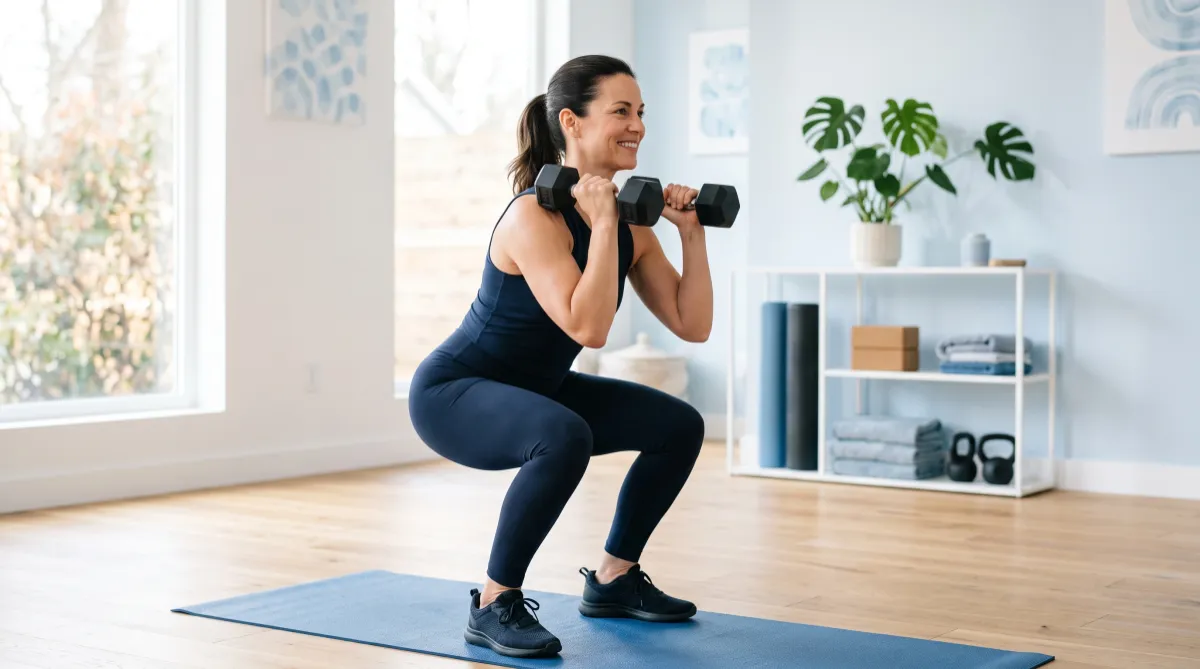
Do strength training at least two days a week. The Physical Activity Guidelines for Americans recommend muscle-strengthening activity at least two days a week for adults. Weights, resistance bands and bodyweight moves like squats and push-ups all count. Strength work tells your body that your muscle is still needed.
Keep moving every day. Walking and other cardio support fat loss, heart health and energy. They work best alongside strength work, not instead of it.
Choose a steady pace. Very fast weight loss makes muscle loss more likely. A gradual pace gives you a better chance of losing mostly fat. Talk with your provider about a pace that is right for you.
Do not skip meals because you are not hungry. On a GLP-1 medication, smaller meals are normal, but they still need to include protein. A protein-rich snack can fill the gap on low-appetite days.
Sleep and recover. Muscles repair while you rest. Aim for consistent sleep and give yourself recovery days between hard workouts.
Measure every four to six weeks. Track body composition, inches and strength, not just pounds. If lean mass starts to drop, adjust before it becomes a bigger problem.
If you would like help building meals that protect muscle on a smaller appetite, our guide to working with a nutritionist for weight loss in Clifton explains how one-on-one nutrition support works.
What if your metabolism feels slower as you lose weight?
It is normal for your body to use a little less energy as you get smaller. Losing muscle can make that drop bigger, because muscle uses more energy at rest than fat does. That is one more reason to protect it. If you feel like your progress has stalled for reasons you cannot explain, our guide on whether your metabolism is really slow walks through the most common causes and what helps.
Serving Clifton and the surrounding communities
Transformative 360 is located on Route 46 in Clifton, a short drive for people across Passaic, Essex and Bergen counties. We regularly see patients from Passaic, Paterson, Garfield, Nutley, Montclair, Bloomfield, Wayne, Totowa, Little Falls, Woodland Park, East Rutherford, Wallington and Rutherford. If you want to know whether you are losing fat or muscle, our Clifton office is easy to reach, and a Fit3D body scan is part of every consultation.
Book your consultation to see what you are really losing
If the scale is moving but you are not sure what it means, a body composition scan gives you a clear answer. Pair it with a one-on-one consultation and you will leave with a plan built to help you lose fat and keep the muscle that supports your health, shape and long-term results.
Transformative 360 is proud to be recognized with the BusinessRate #1 award for weight loss services in Clifton, NJ.
Ready to get started? Book your consultation online or call us at (201) 554-3755. Transformative 360, 1117 RT 46 E Suite 203, Clifton NJ 07013.
Frequently asked questions
Is it normal to lose some muscle when losing weight?
Yes. Most weight loss includes some lean tissue along with fat. The goal is not zero muscle loss, but keeping it as small as possible with enough protein, regular strength training and a steady pace.
How do I know if I am losing fat or muscle?
The most reliable way is a body composition measurement repeated over time. If your body fat percentage falls and your lean mass holds steady, you are losing mostly fat. Feeling weaker, low energy and a fast drop on the scale without much change in shape can be signs of muscle loss.
Does Liraglutide cause muscle loss?
Any weight loss method, including medication, can take some muscle along with fat, especially if protein and activity drop. Liraglutide is prescribed and monitored by a provider, and tracking body composition during treatment helps make sure you are protecting muscle. Ask your provider about your own situation.
How much protein do I need while losing weight?
It depends on your body size, activity level and health history, so there is no single number for everyone. Your provider or nutritionist can suggest a daily target. A simple start is to include a protein source at every meal.
Can I build muscle while losing fat?
Often, yes, especially if you are new to strength training or returning after a break. Eating enough protein and doing regular resistance exercise make it more likely. The scale may move slowly while your body composition improves.
Will strength training make me bulky?
For most people, no. Building large muscles takes years of focused training and eating. During weight loss, strength training mainly helps you keep the muscle you have, which leads to a firmer, more toned shape.
How often should I check my body composition?
Every four to six weeks works well for most people. Checking too often turns normal day-to-day swings into worry. Use the same method and similar conditions each time.
